Tell us about the job
Takes about a minute. No obligation.
A water heater that stops delivering in Brunswick County has almost certainly worn out from the inside. 54 severe weather events were recorded in Brunswick County, Virginia between 2015 and 2024. At that rate, severe weather is an occasional fact of life here, not the standing load it is in harder-hit parts of the state, which means a contractor sent out on a repair call is looking at the tank lining, the anode rod, and the heating element before anything else. Sediment accumulates regardless of what the sky does, and most failures here trace back to deferred flushing or a part that simply reached the end of its service life.
A water heater old enough to have been installed when the house was new is running on parts that the supply chain may no longer stock. Half the homes in Brunswick County, Virginia were built in 1979 or earlier (2020-2024 ACS 5-year). For a contractor opening a unit in a house from that era, the diagnostic question splits quickly: is the failed component still made, and if so, is the cost of sourcing it less than the cost of what comes next. Sediment buildup, corroded anode rods, and fatigued tank welds are the physical record of that service life, and each one changes what the repair scope looks like.
The Parts of a Water Heater a Contractor Checks First
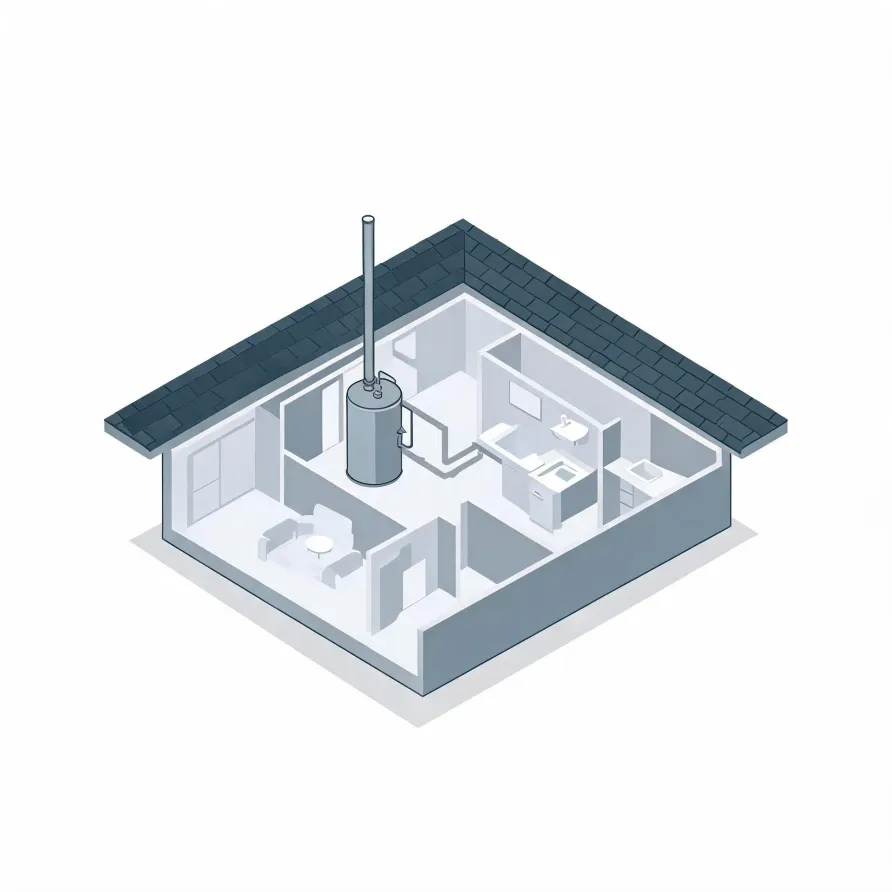
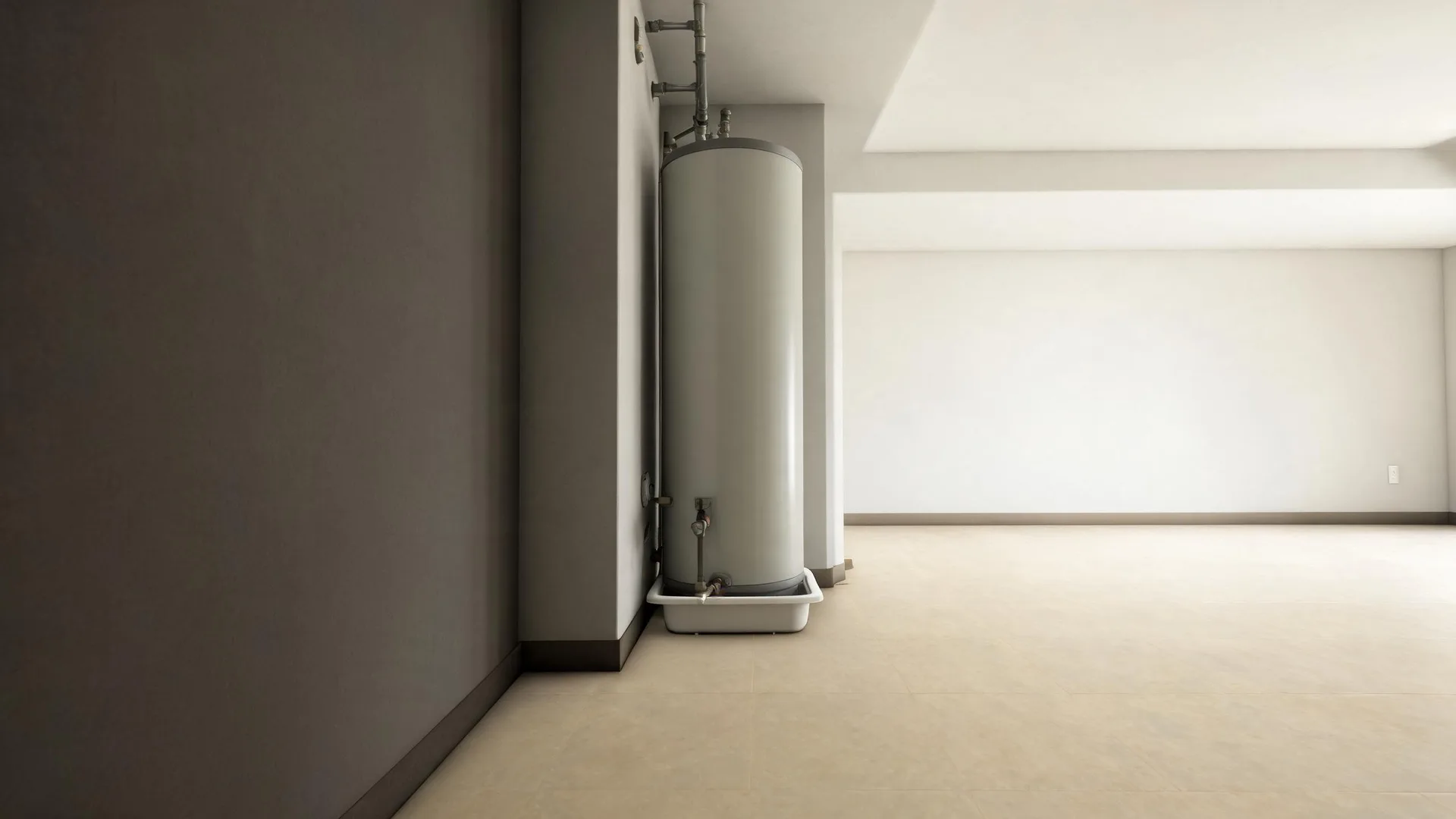
The tank is what most homeowners see: a large insulated cylinder that sits in a utility room, basement, or garage and holds water at a set temperature until a tap opens. Inside the tank, a heating element or burner does the actual work, and when a water heater stops performing, one of those two is usually where a contractor starts.
The thermostat mounted on the tank controls when the heating source fires and at what temperature it stops. Alongside it sit the pressure relief valve, which releases if internal pressure climbs too high, and the anode rod, which runs down through the tank interior and slows corrosion of the tank walls.
The drawing shows a typical layout, and a licensed contractor determines what applies to the specific unit in your home.
Get matched in Brunswick CountyBrunswick County, Virginia, by the numbers
54 severe weather events were recorded in Brunswick County, Virginia between 2015 and 2024.
NOAA National Centers for Environmental Information, Storm Events Database, bulk CSV export, events 2015-01-01 through 2024-12-31.Half the homes in Brunswick County, Virginia were built in 1979 or earlier (2020-2024 ACS 5-year).
U.S. Census Bureau, 2020-2024 American Community Survey 5-Year EstimatesBrunswick County, Virginia holds 7,957 housing units (2020-2024 ACS 5-year).
U.S. Census Bureau, 2020-2024 American Community Survey 5-Year EstimatesOwners occupy 74.4% of the occupied homes in Brunswick County, Virginia (2020-2024 ACS 5-year).
U.S. Census Bureau, 2020-2024 American Community Survey 5-Year EstimatesRules and Standards Behind Water Heater Repair in Brunswick County, Virginia2 sourced rules and standards
Licensing and Legal Requirements in Brunswick County, Virginia
Virginia’s contractor licence classes start above $1,000: the entry class covers a single contract or project over $1,000 but less than $30,000, or less than $250,000 of work in any 12-month period, with larger classes above that.
Virginia requires a contractor licence: no person may engage in, or offer to engage in, contracting work in the Commonwealth without one.
Severe Weather Events in Brunswick County
Storms and temperature swings put real strain on water heaters, forcing them to work harder and wear faster. How often that happens in Brunswick County shapes what local repair needs look like and what a contractor working here should expect.
54 severe weather events, 2015–2024. Source: NOAA National Centers for Environmental Information, Storm Events Database.