Tell us about the job
Takes about a minute. No obligation.
A water heater repair in Pulaski County rarely traces back to weather as the driving cause. 77 severe weather events were recorded in Pulaski County, Virginia between 2015 and 2024. At that rate, severe weather is an occasional event in this area, not a standing pressure on equipment. What wears a water heater down here is time: sediment accumulation hardens heating elements, anode rods corrode past the point of protection, and tanks that have run long enough begin to fail from the inside. A contractor arriving at a repair looks at those conditions first, because that is where the answer almost always sits.
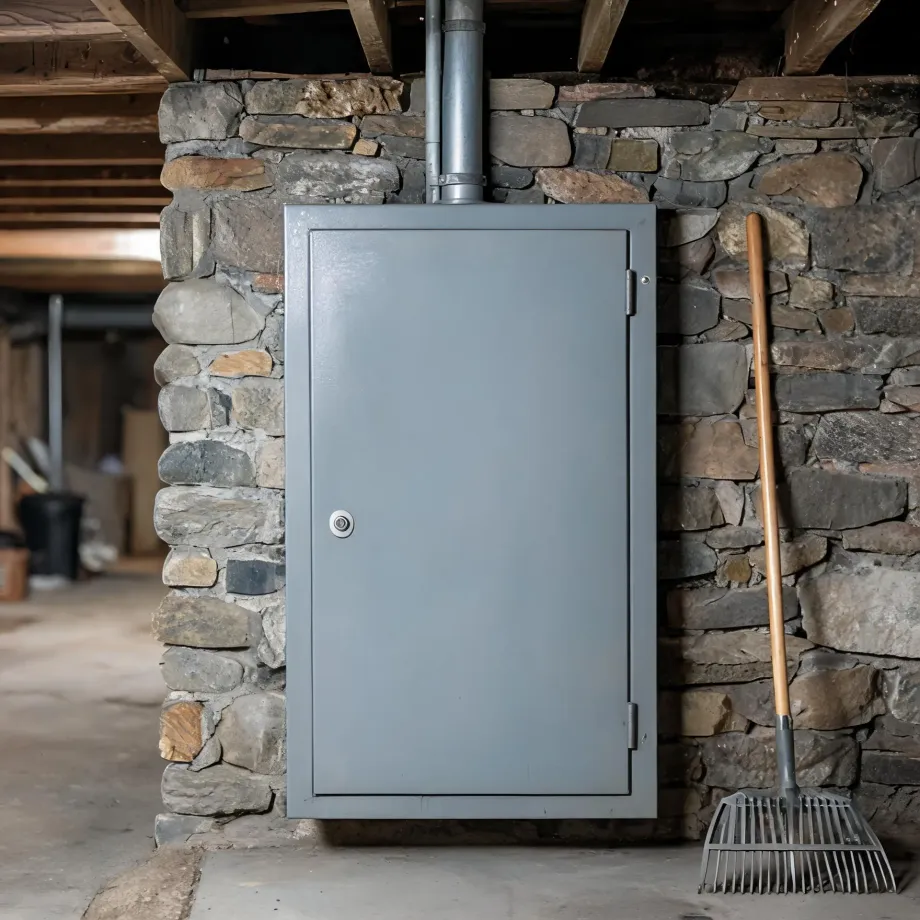
Water heaters in a house this age have usually been replaced at least once, and what each replacement left behind is only visible once a contractor opens the system. Half the homes in Pulaski County, Virginia were built in 1975 or earlier (2020-2024 ACS 5-year). That history matters for repair because sediment load, anode rod condition, and the state of the supply connections all reflect how the unit has been maintained and what it replaced, not what the label on the tank says. A contractor pricing a repair here quotes what the opened system shows, which can differ sharply from what the same model would show in newer construction.
The Parts of a Water Heater a Contractor Checks First
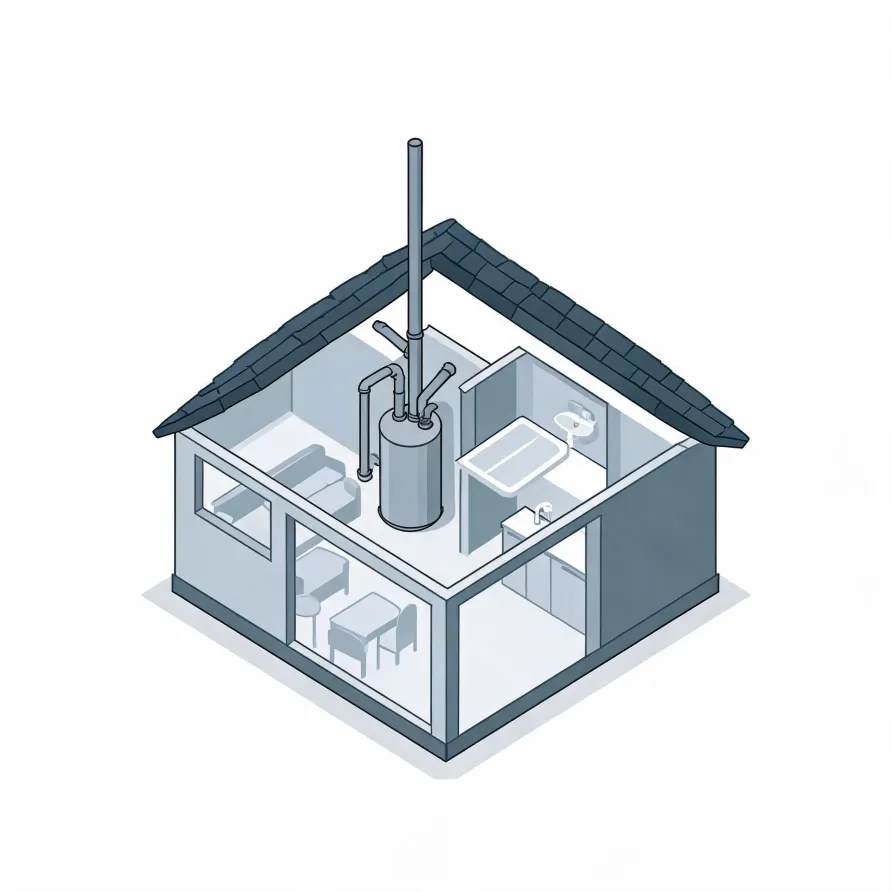
The tank is what most homeowners see: a large insulated cylinder that sits in a utility room, basement, or garage and holds a reserve of hot water ready for use. Inside it, a burner or heating element at the base or lower section raises the water temperature. When a water heater stops producing hot water or produces it inconsistently, the burner assembly or heating element is where a contractor looks first.
The thermostat mounts against the tank and tells the heating source when to fire and when to stop. The pressure relief valve sits near the top and is a safety device that releases if pressure inside builds too high. A dip tube runs down into the tank to direct cold incoming water to the bottom, and the anode rod suspends inside the tank to slow corrosion of the steel walls.
The drawing shows the general layout of a water heater system, and a licensed contractor determines which parts apply to the specific unit and installation in your home.
Get matched in Pulaski CountyPulaski County, by the numbers
77 severe weather events were recorded in Pulaski County, Virginia between 2015 and 2024.
NOAA National Centers for Environmental Information, Storm Events Database, bulk CSV export, events 2015-01-01 through 2024-12-31.Half the homes in Pulaski County, Virginia were built in 1975 or earlier (2020-2024 ACS 5-year).
U.S. Census Bureau, 2020-2024 American Community Survey 5-Year EstimatesPulaski County, Virginia holds 17,056 housing units (2020-2024 ACS 5-year).
U.S. Census Bureau, 2020-2024 American Community Survey 5-Year EstimatesOwners occupy 73.4% of the occupied homes in Pulaski County, Virginia (2020-2024 ACS 5-year).
U.S. Census Bureau, 2020-2024 American Community Survey 5-Year EstimatesCodes & Standards Governing Water Heater Repair in Pulaski County, Virginia2 sourced rules and standards
Licensing Rules for HVAC Repair in Pulaski County, Virginia
Virginia’s contractor licence classes start above $1,000: the entry class covers a single contract or project over $1,000 but less than $30,000, or less than $250,000 of work in any 12-month period, with larger classes above that.
Virginia requires a contractor licence: no person may engage in, or offer to engage in, contracting work in the Commonwealth without one.
Severe Weather Events in Pulaski County, Year by Year
Extreme weather puts real stress on water heating equipment, from hard freezes that strain tanks to power surges that follow storms. How often that happens in Pulaski County shapes how hard local water heaters work and how soon repair needs tend to surface.
77 severe weather events, 2015–2024. Source: NOAA National Centers for Environmental Information, Storm Events Database.