Tell us about the job
Takes about a minute. No obligation.
A contractor quoting a water heater repair in Highland County has to decide what actually drove the failure before they can tell you what the fix costs. 71 severe weather events were recorded in Highland County, Virginia between 2015 and 2024. At that rate, severe weather is something this area sees, not something it lives inside. Sediment buildup, a worn anode rod, or a failing heating element are what a contractor finds most often here, and those trace back to the age of the unit and how well it was installed, not to the weather outside.
Half the homes in Highland County, Virginia were built in 1971 or earlier (2020-2024 ACS 5-year). A water heater sitting in a house that old is rarely the only thing a contractor is looking at. The supply lines, shutoff valves, and venting connections that feed and exhaust the unit have had a long time to corrode or be patched by whoever owned the house before. When a contractor opens up the job, what takes the repair in a new direction is usually one of those surrounding components, not the heater itself. Parts for the heater are findable; a badly corroded nipple or a venting run that no longer meets code is a different conversation about scope and cost.
The Parts of a Water Heater a Contractor Checks First
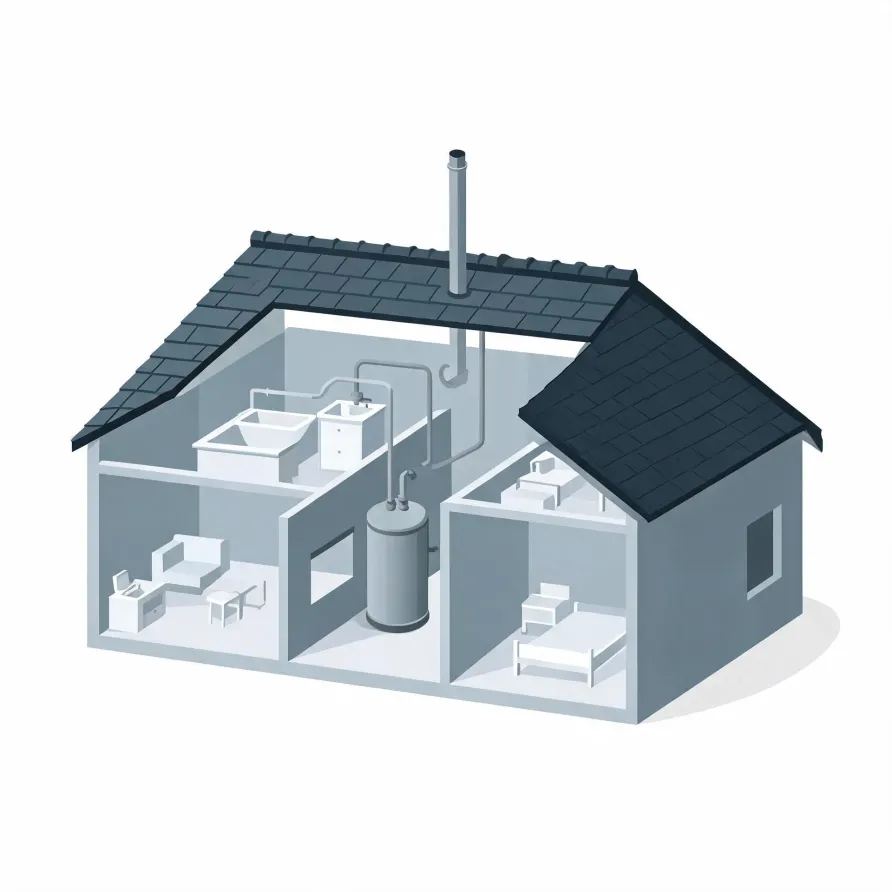
The tank is the piece a homeowner knows best, sitting in a utility closet, basement, or garage and holding water at a set temperature around the clock. The heating element or burner assembly sits inside or beneath the tank and is where a contractor looks when water stops getting hot or heats unevenly.
The thermostat controls when heating starts and stops, and a faulty one often mimics a failed element. The pressure relief valve, the anode rod, and the inlet and outlet connections round out what a contractor examines, each sitting at or near the tank and each capable of causing leaks, sediment buildup, or inconsistent output.
The drawing shows the general layout of a water heater system, and a licensed contractor determines which parts apply to the specific unit and setup in your home.
Get matched in Highland CountyHighland County, Virginia, by the numbers
71 severe weather events were recorded in Highland County, Virginia between 2015 and 2024.
NOAA National Centers for Environmental Information, Storm Events Database, bulk CSV export, events 2015-01-01 through 2024-12-31.Half the homes in Highland County, Virginia were built in 1971 or earlier (2020-2024 ACS 5-year).
U.S. Census Bureau, 2020-2024 American Community Survey 5-Year EstimatesHighland County, Virginia holds 1,864 housing units (2020-2024 ACS 5-year).
U.S. Census Bureau, 2020-2024 American Community Survey 5-Year EstimatesOwners occupy 88.9% of the occupied homes in Highland County, Virginia (2020-2024 ACS 5-year).
U.S. Census Bureau, 2020-2024 American Community Survey 5-Year EstimatesCodes & Standards Governing Water Heater Repair in Highland County, Virginia2 sourced rules and standards
Licensing and Legal Requirements in Highland County, Virginia
Virginia’s contractor licence classes start above $1,000: the entry class covers a single contract or project over $1,000 but less than $30,000, or less than $250,000 of work in any 12-month period, with larger classes above that.
Virginia requires a contractor licence: no person may engage in, or offer to engage in, contracting work in the Commonwealth without one.
Weather Events in Highland County That Put Pressure on Water Heaters
Storms, cold snaps, and power disruptions place real stress on water heaters, forcing the equipment to work harder and fail sooner. How much of that burden a water heater carries depends heavily on where it sits, and Highland County has its own pattern.
71 severe weather events, 2015–2024. Source: NOAA National Centers for Environmental Information, Storm Events Database.